
January 29th – January 31st, 2026
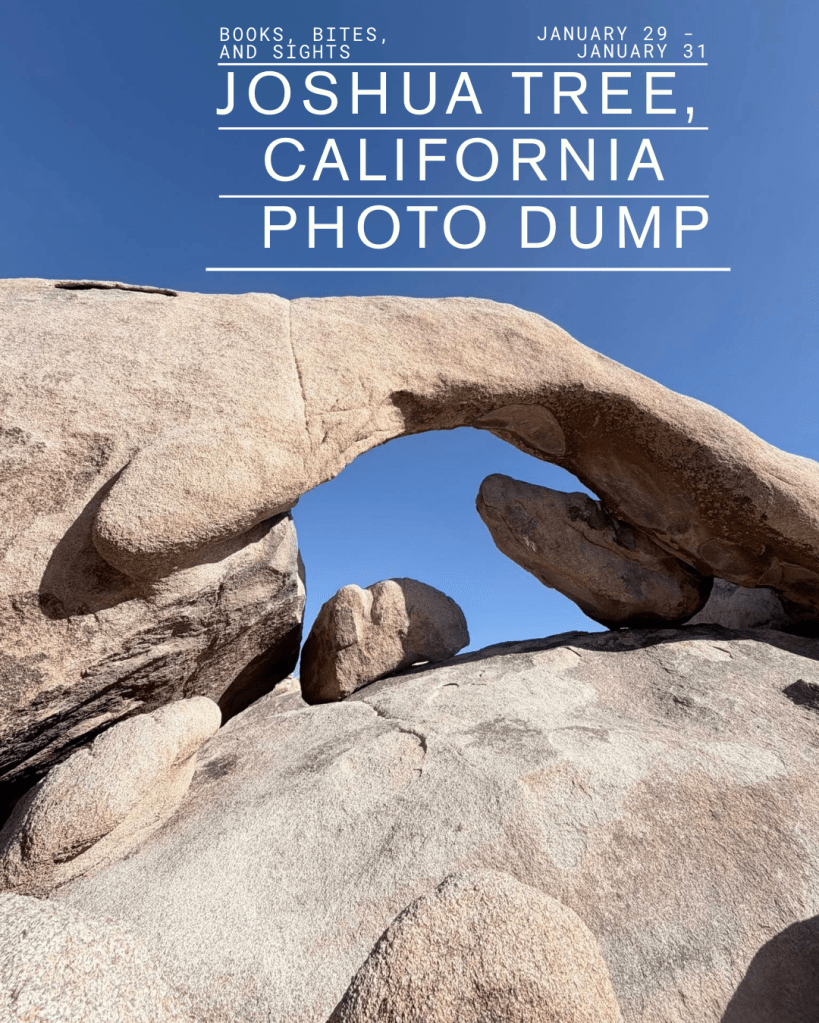
I have always heard that a rolling stone gathers no moss, and, while Amory and I love to do all the things in all the places while traveling, when we made it to the desert town of Joshua Tree, California, we were both in need of moss gathering.
Quick personal story.
When I was teaching in Nepal, my Nepali colleagues would catch me reading and basking in the sun on my lunch break and say in Nepali, “Wow Sita Miss, you are so lazy.” And I would have the biggest knee-jerk reaction to this, but because my Nepali was rudimentary and because I am at heart a people-pleaser, I would just laugh it off, especially at first. But this idea and verbiage of lazy kept coming up. Every day my counterparts would call me lazy – alchī in Nepali. And I would ruminate on it all day, thinking, “I am not lazy. I am the most hard working person I know. How dare they call me lazy. Don’t they see how hard I work? Do they not like me?”
When I brought this up with Laxmi, my peace corps mentor and a Nepali national, she couldn’t understand why I was so upset. I explained to her that I felt insulted, and she asked why. And I remember thinking, “Why? Seriously? Lazy is bad. Calling someone lazy is extremely insulting.”
After listening to me rant and rave about this four-letter word, Laxmi explained to me that my frustration was rooted in a cultural misunderstanding.
She explained to me that in Nepal, rest is important. Rest is needed. Without rest, you cannot do your work, and you certainly cannot do your work to the best of your ability. And how do you rest? By being lazy. When my counterparts were calling me lazy, they weren’t trying to insult me. They weren’t trying to motivate me to get back to work. Rather, they were honoring and acknowledging my ability, and privilege, to set aside time for myself and for rest.
This is lightyears away from how we view rest and being lazy in the states. Here we must multi-task and mark all the things off our to-do lists daily – or else. Or else we can’t complain about what we don’t have. Or else we are seen as lacking. And, like most, I hold myself to this toxic standard and even catch myself perpetrating it onto others.
I am exhausted from the constant grind, but I still can’t allow myself to be lazy. I can’t allow myself rest. I must be a constant walking, talking go-getter. From the moment I wake up to the moment I lay down. Why? Because if I am not being productive with every millisecond of my life, with every thought, I am a failure. But rest is not failing. And being lazy is how you rest.
When week 3 of our trip hit, Amory and I needed to be lazy. But it felt wrong. I kept thinking: What else can we do here? Should we go try out another trail? But what if we miss something? We won’t be here again. I don’t want FOMO. I need to be doing something. I have five minutes. What else can I get done?
But what I needed to be doing is what I forced myself to do: rest and be lazy. Reader – I know you’re like me. You also feel the pressure to always do. More. More. Never stop. Never rest. But I swear – fight it. Less is more. Take rest. Be lazy.
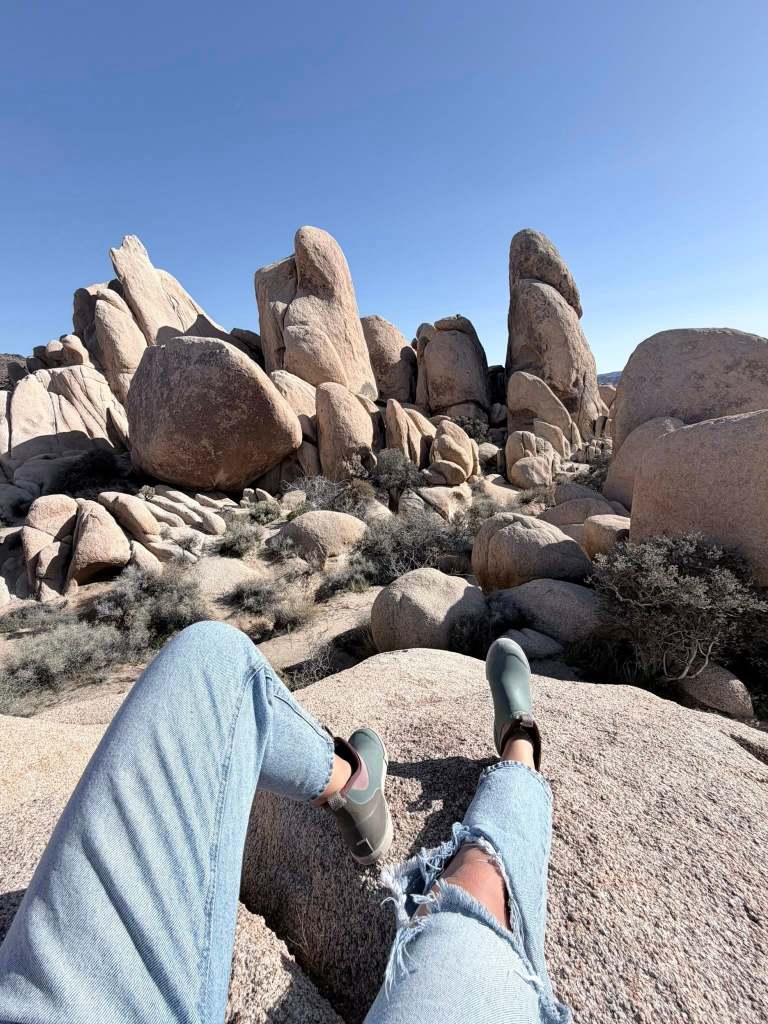
While it didn’t come naturally and was a bit uncomfortable initially, my lazy days in Joshua Tree National Park amongst the jumbo rocks and sprawling Joshua trees have been some of my favorite days of this journey thus far.
Books
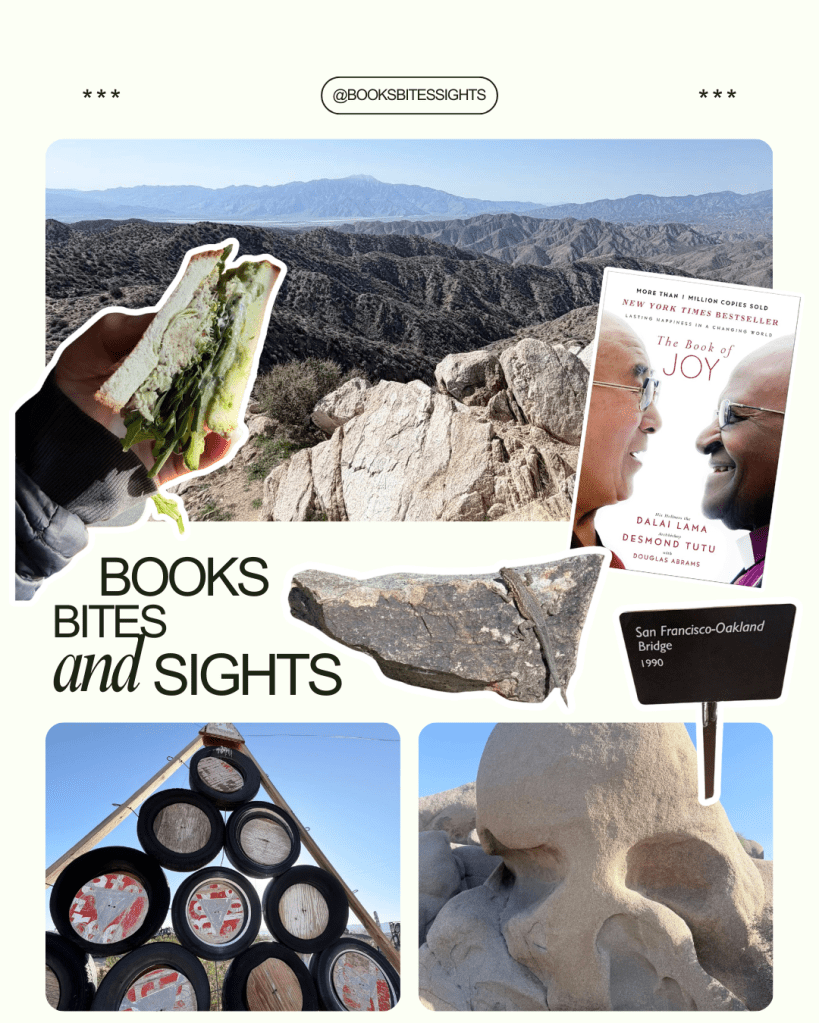
The Book of Joy by 14th Dalai Lama, Desmond Tutu, and Douglas Abrams
4/5 stars
My journey with spirituality is complicated. I grew up Christian, fell off and dove deep into both nihilism and atheism in college, began ascribing to a secular form of spirituality when I began teaching, and am now a practicing Buddhist.
With all that being said, my spiritual journey is my own, and I feel no need to explain nor define my spirituality to anyone but myself. I do however love long heart-to-heart and head-to-head discussions about life with open-minded and non-judgmental folk.
But one thing I have learned through my spiritual practices is that it does require practice. I will find myself going through periods of time without taking any timein my day to meditate, practice gratitude, or do devotions. And these time periods are typically the ones where I feel least joyous, least grateful, least mindful, and most attached. As inconvenient as it may feel, spirituality requires a bit of time and effort. And for me it needs to be daily.
I first began reading The Book of Joy last Summer (and to be truthful, I am still not finished). Personally, I feel these types of devotional, non-fiction books are best read in small, daily chunks to better serve as gentle reminders in print to step outside of my ego and thought patterns.
If you’re interested in better understanding the differences in happiness and joy or would like the reminder of how interconnected and one-in-the-same all of humanity truly is, then I suggest you check this book out. Below are some of the quotes that have resonated most with me so far:
- “… many of the things that undermine our joy and happiness we create ourselves.”
- “If something can be done about the situation, what need is there for dejection? And if nothing can be done about it, what need is there for dejection?”
- “We try to control the moment, which results in our feeling that what is happening should not be happening. So much of what causes heartache is our wanting things to be different than they are.”
- “… when we see how little we really need – love and connection – then all the getting and grasping that we thought was so essential to our well-being takes its rightful place and no longer becomes the focus or the obsession of our lives.”
- “Think about where you are suffering in your life and then think about all the other people who are going through a similar situation. This perhaps is quite literally the birth of compassion, which means “suffering with”.
Bites
Joshua Tree Farmer’s Market ($50)
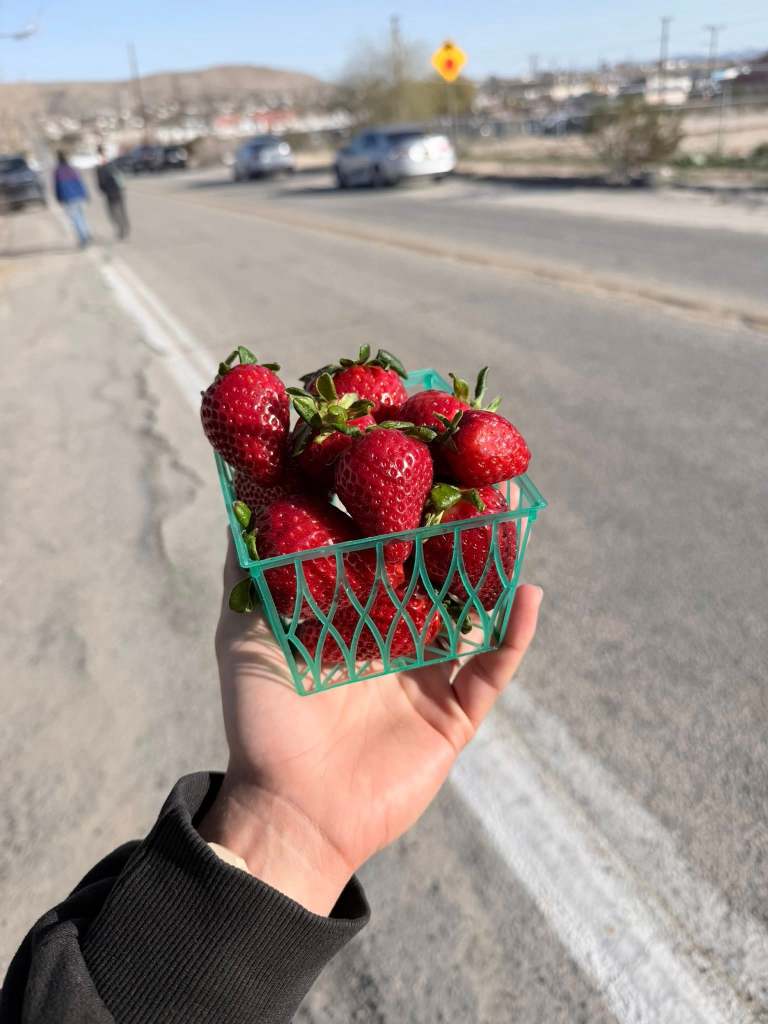
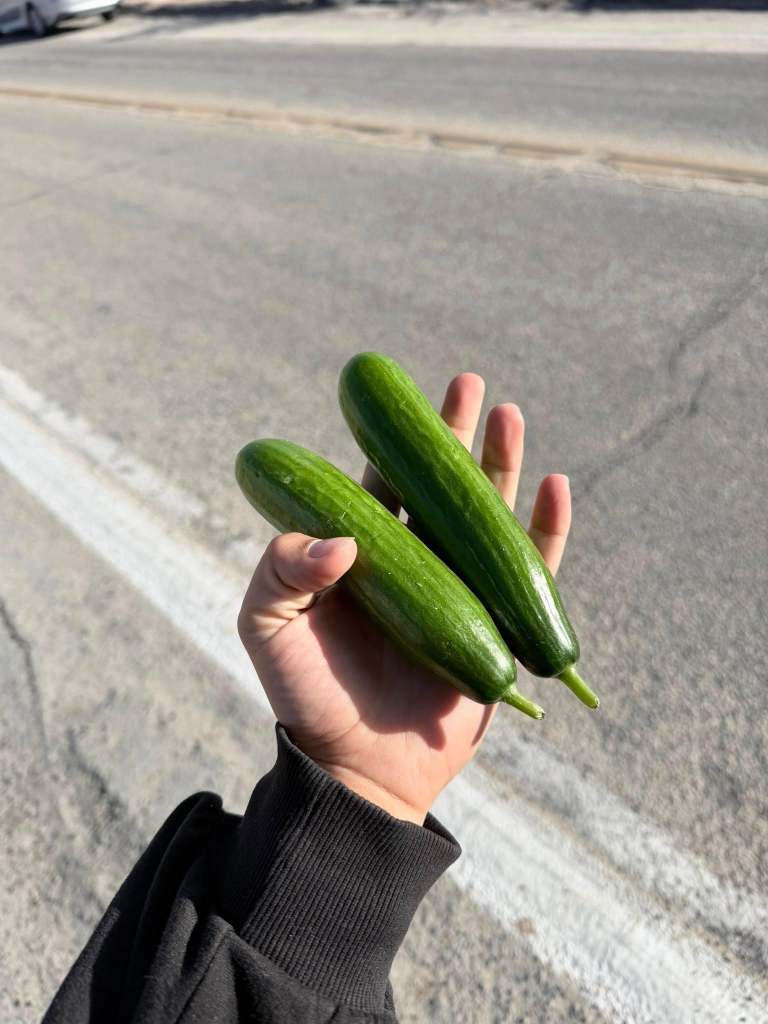
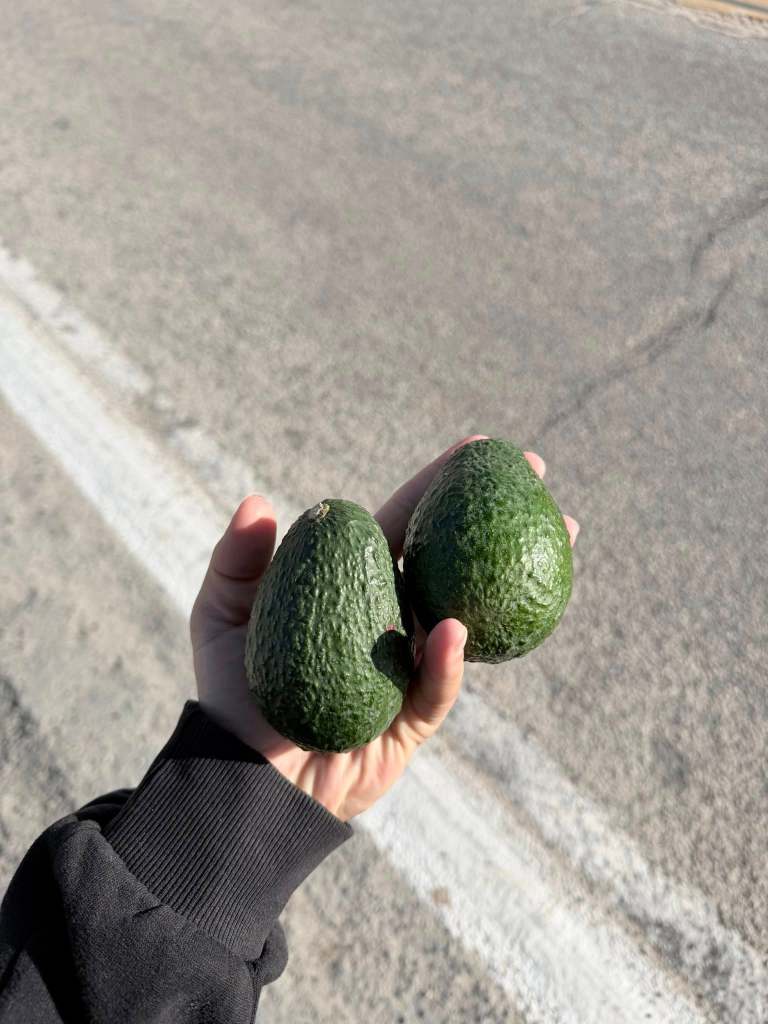
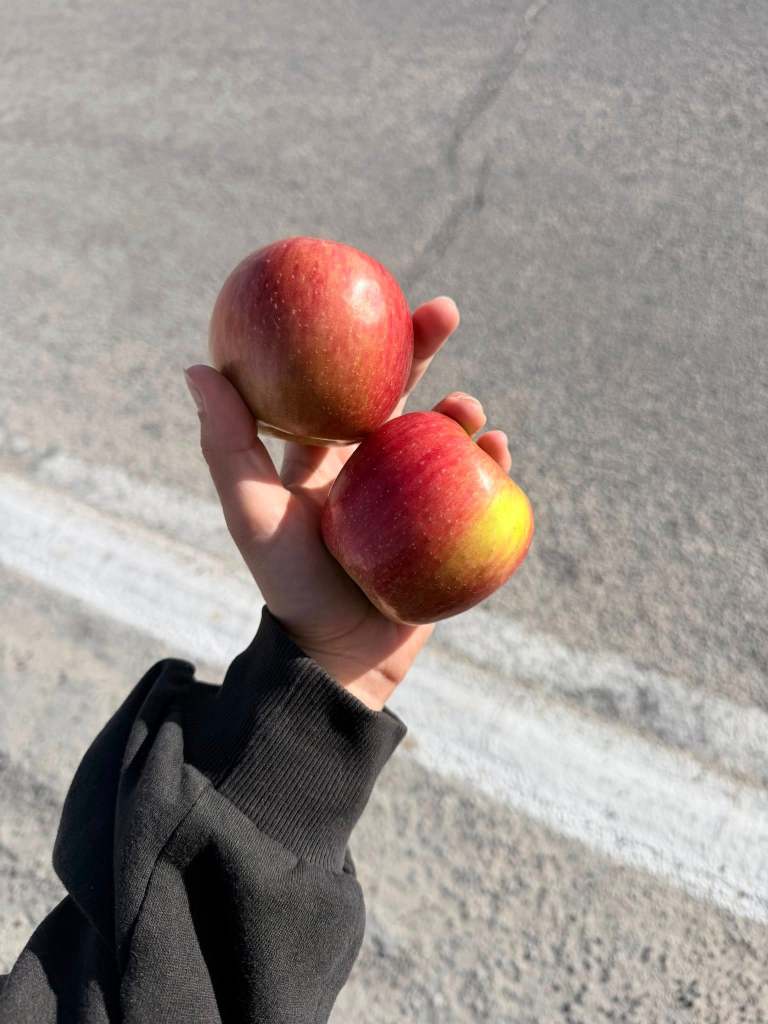
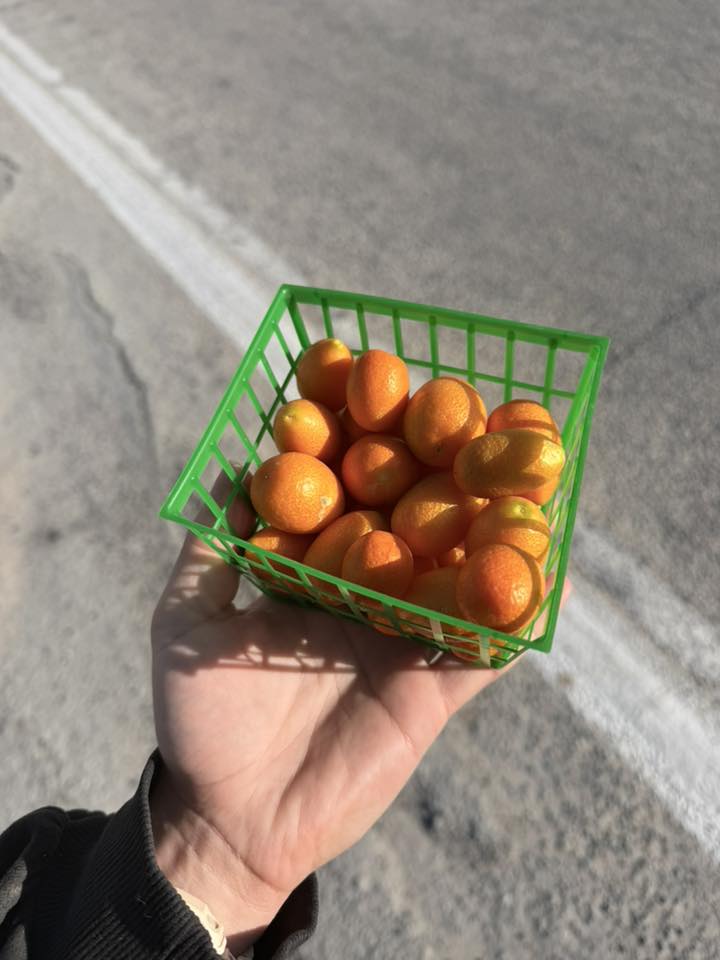
- Every Saturday from 8 – 1 in Downtown Joshua Tree there is a local farmer’s market. Luckily Amory and I were in Joshua Tree on a Saturday, so we decided to swing by. Nothing is worse than when I roll into a “farmer’s market” and its really just a craft fair, but this was not the case in Joshua Tree. This farmer’s market was a true farmer’s market in that it had local vegetables, fruits, baked goods, and meats available to purchase.
- My favorite find was Cherry’s Famous Rugelachs. Books, Bites, Insights? A rugelach is a traditional Jewish crescent-shaped cookie – rugelach is yiddish for ‘little twist’. And the owner, Cherry, has worked hard to perfect a vegan, gluten-free version of this pastry. We met Cherry himself and were immediatley sold by his charisma and charm. He offered us free samples. And how could we walk away from free samples. After trying three different flavors, we went with the cinnamon raisin nut. If you’re interested getting some rugelachs for yourself, they do ship! Here is his website: https://cherrysfamous.com/home/
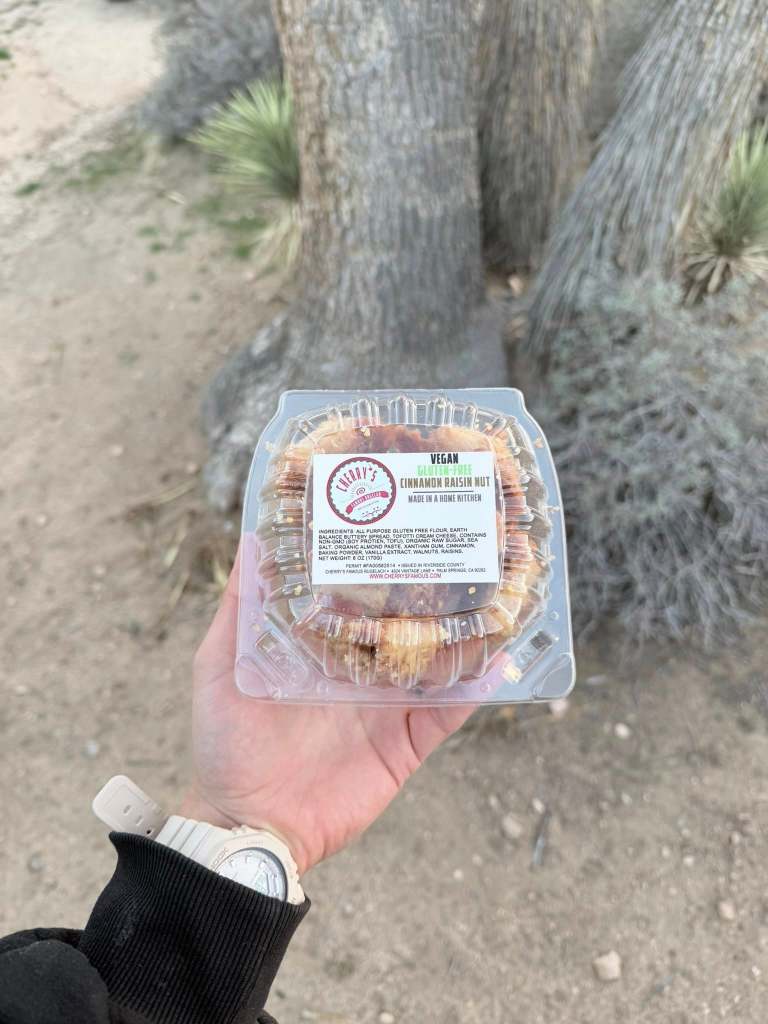
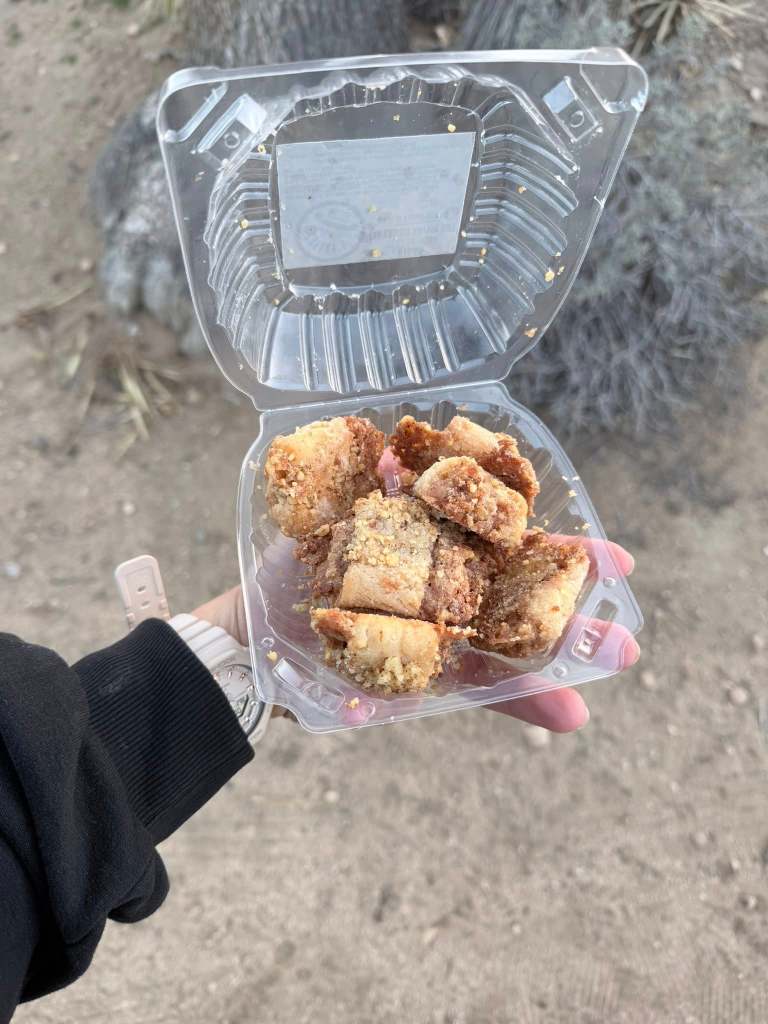
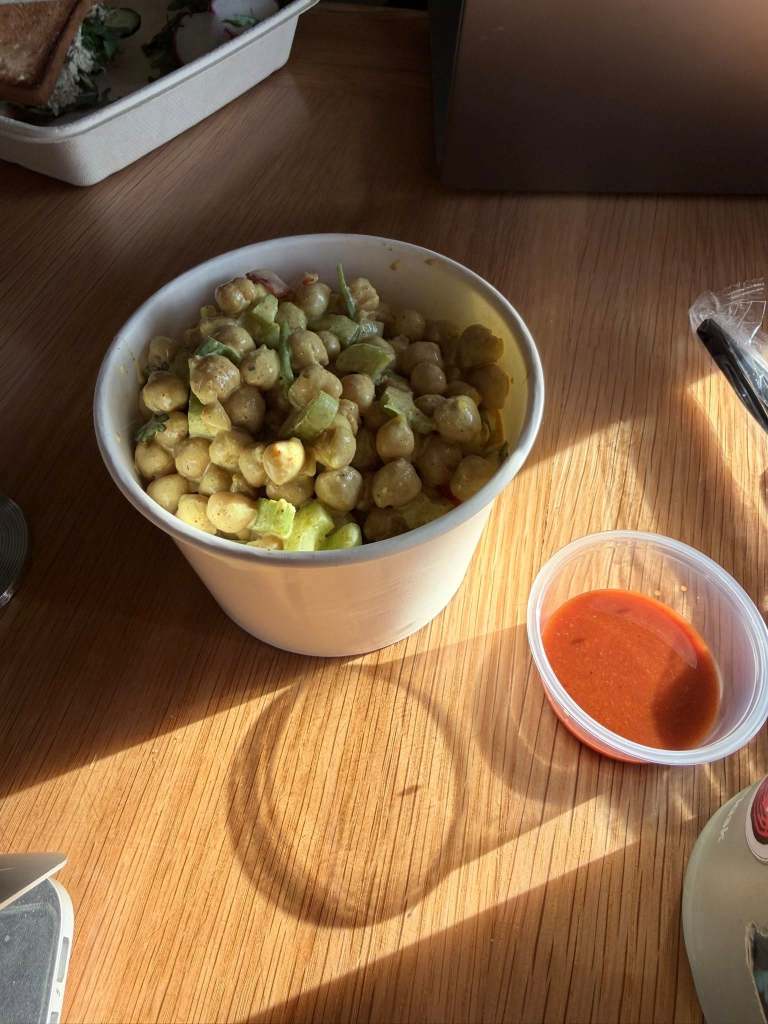
- Every booth at the market took both cash and card. A few of my other favorite purchases are pictured below.
Pancakes topped with Farmer’s Market Berries ($14 for berries)
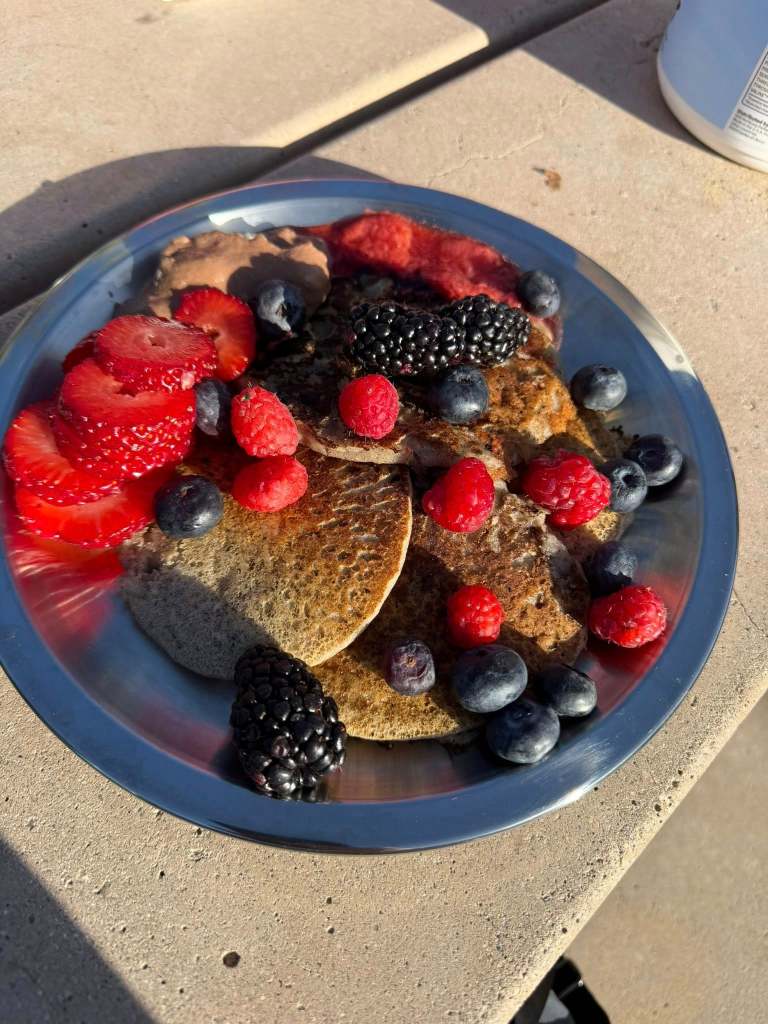
- Buckwheat pancakes and fresh, local berries from the Joshua Tree farmer’s market. The picture speaks for itself – nothing left to say.
Frontier Cafe in Yucca Valley, California ($45)
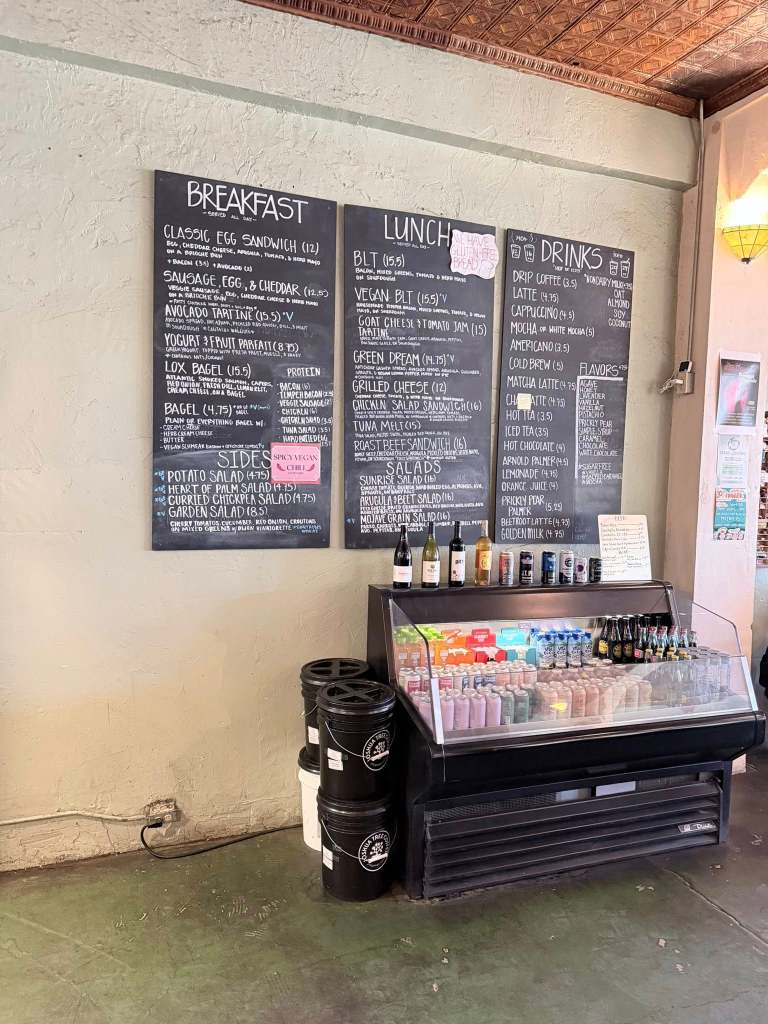
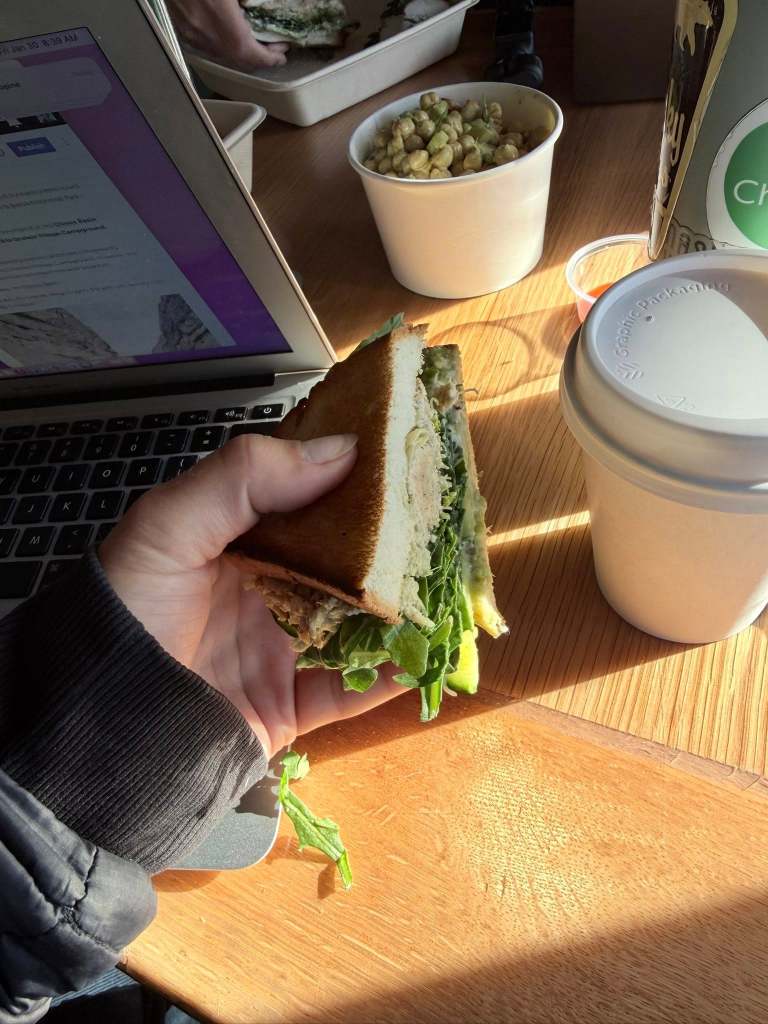
- While a bit on the pricer side, Frontier Cafe gave Amory and I a yummy, clean, and nutritious meal, hot coffee, free WiFi, nice restrooms, and ample outlets. We stayed here for nearly two hours working on all the things and enjoyed the ambiance, amenities, and food. They had plenty of vegan and gluten-free options and far surpassed the other cafes we visited in Joshua Tree.
Sights
Day 1: Driving-in and easy hikes
- After driving nearly five hours on I-10 from Saguaro National Park, we got to the Cottonwood Visitor Center near the Southern entrance of Joshua Tree National Park around noon. At the center we were able to check-off all the things: passport stamps, bathrooms, stickers.
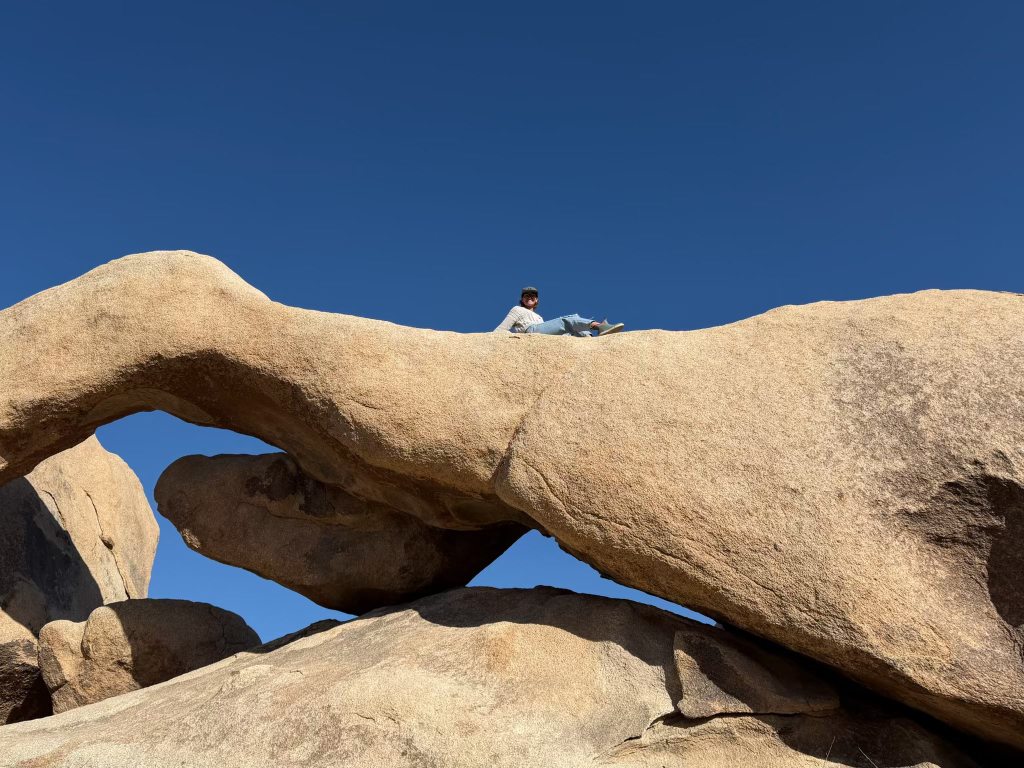
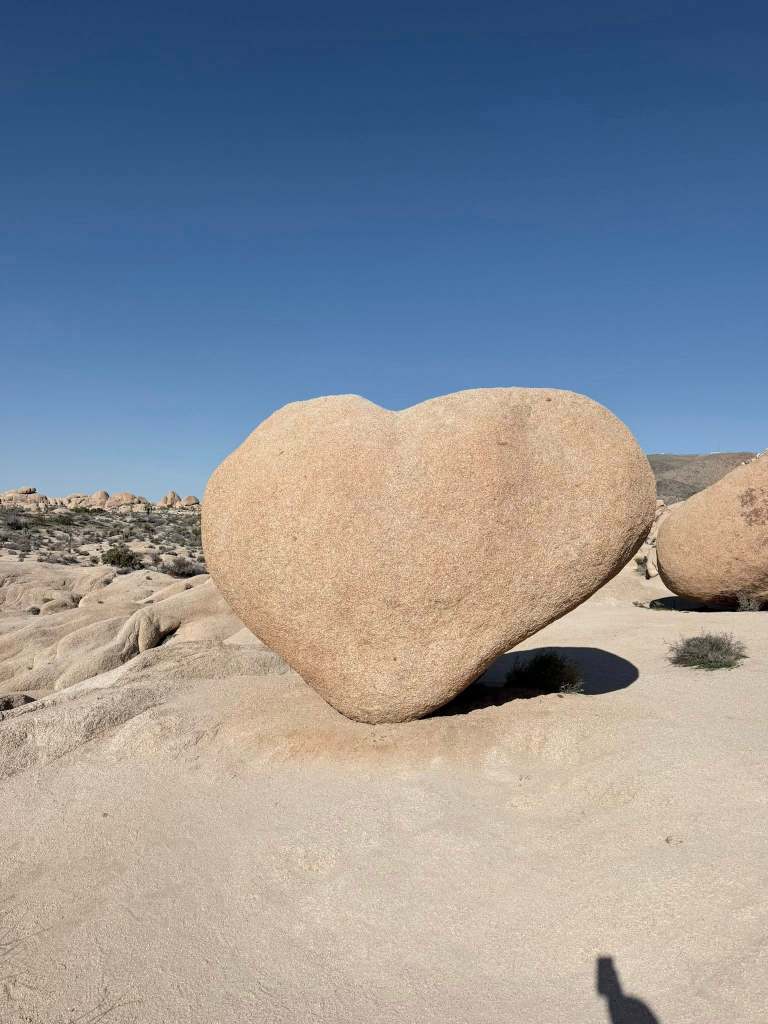
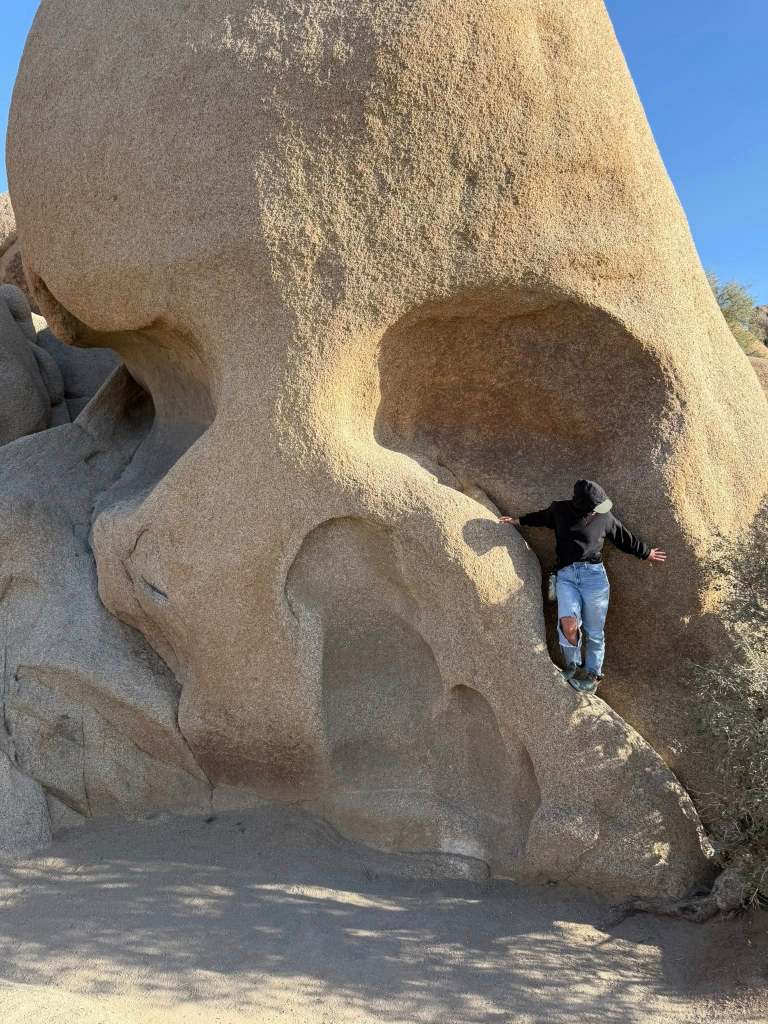
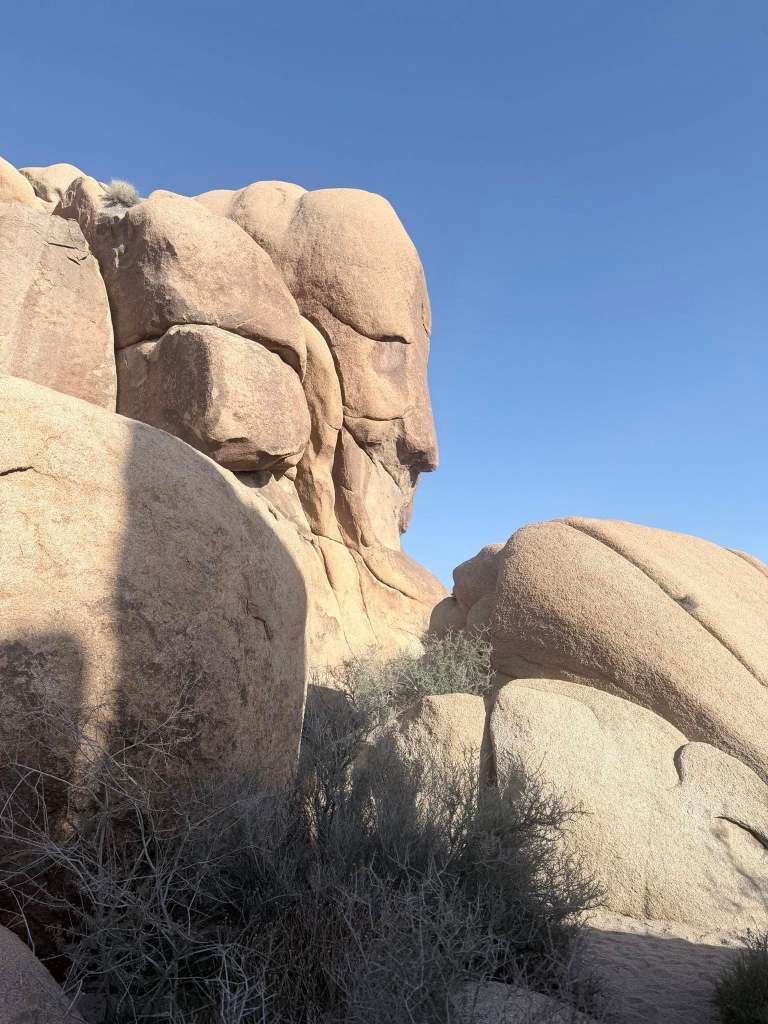
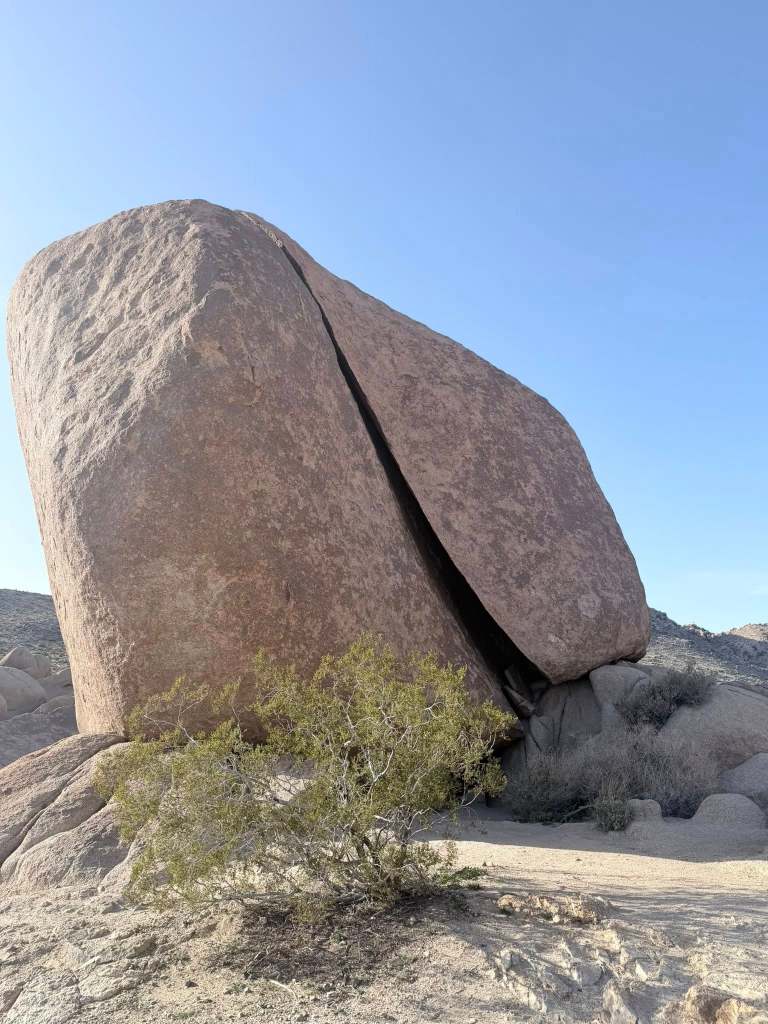
- Since we didn’t have much time on our first day, we decided to explore all the rock trails including: Heart Rock and Arch Rock via the Arch Rock Trail (1.7 miles in-and-out), Skull Rock (less than 300 feet from the road near the Split Rock Loop trailhead), Face Rock via the Split Rock Loop (2.5 miles loop). All of these trails were very easy, well-marked, and full of the name-sake Joshua trees (which I found out are not actually trees but succulents). Books, bites, and insights? Kids would love these trails. I had such a blast climbing on and atop of all of the rocks. The rocks are super grippy and easy to climb, but, as always, use caution.
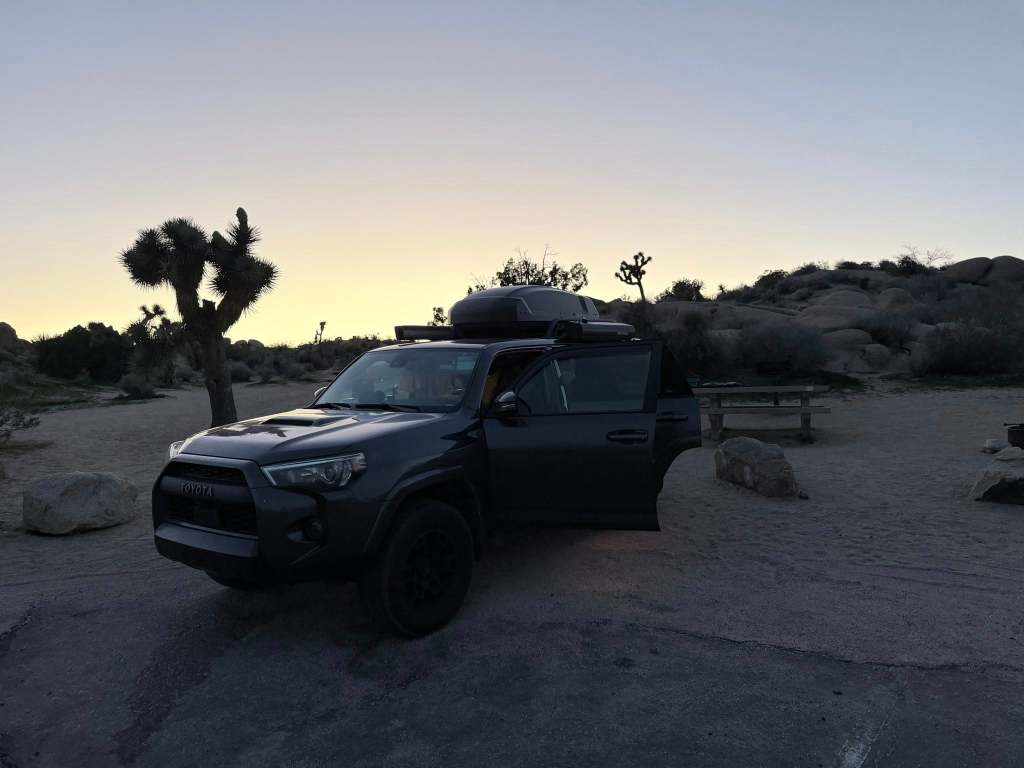
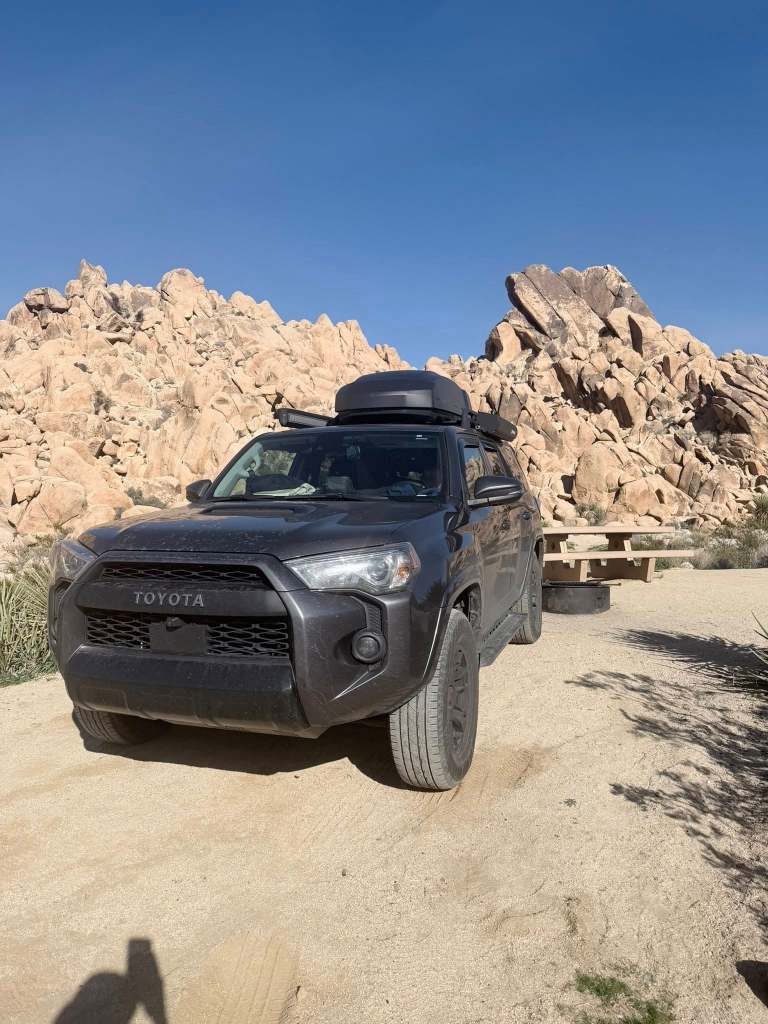
- After hiking, we set up camp at the Jumbo Rocks Campground which was located right behind Skull Rock. This campground costed us $30 for the night, was nestled amongst literal jumbo rocks, had a picnic table at every site, and pit toilets. There was no cell service or potable water available.
Day 2: Sunrise and medium hike
- If you want to catch a sunrise at Joshua Tree, make your way to Keys View. You can pull up and park at this overlook to get a beautiful view over Palm Springs and the Salton Sea, but to get a more panoramic view, hike up to Inspiration Peak. The trail was super windy that morning and a bit tough to follow in the dark – so bring your windbreaker and headlamp if you’re going to go for a sunrise. We hiked 3/4th of this 1.9 mile out-and-back trail. We only went up 3/4ths of the way because we noticed that the elevation was dropping (thanks AllTrails) and wanted to stay at the highest point for sunrise. Books, Bites, Insights? I always use the AllTrails app when navigating trails. Not only can it guide you when trails are not well maintained, but it will also tell you how much elevation you’re gaining or losing. I’ve linked my AllTrails account at the bottom of this post. Feel free to check it out.
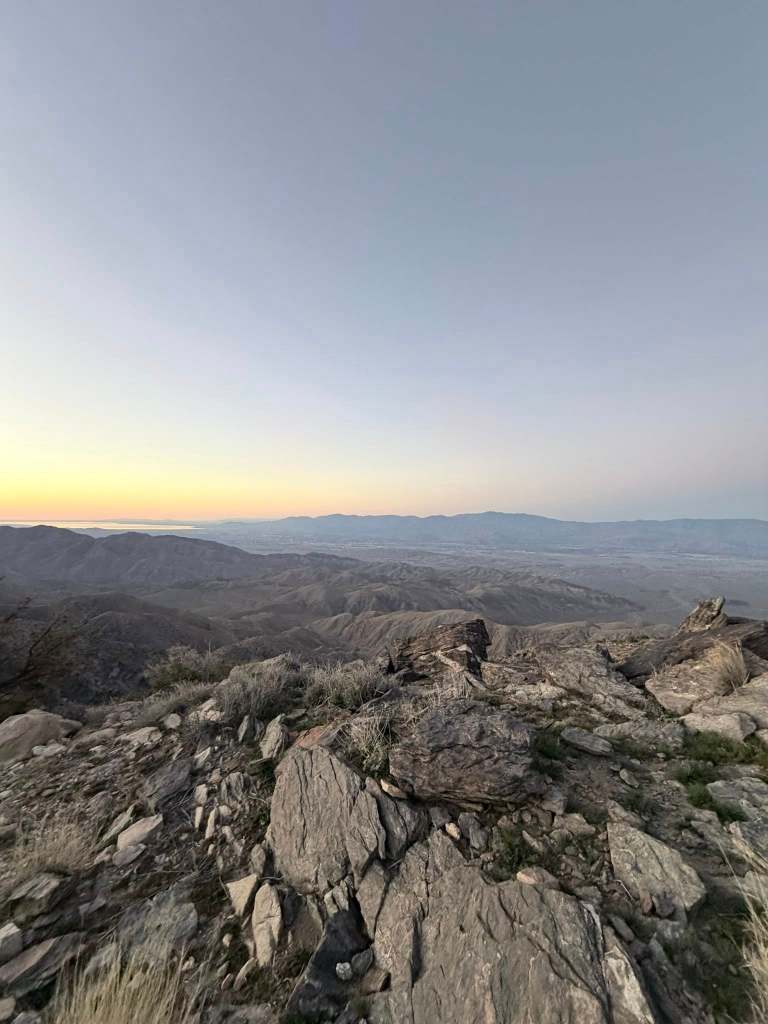
- After sunrise, we did the 6.4 mile Maze and North View Loop Trail, but personally I would skip the North View portion of the trail if I were to do it over. I read a few reviews (again, thanks AllTrails) that claimed that the North View portion of the trail was “wide, sandy, and boring”, but I wanted to see for myself. Turns out the reviews were accurate lol. Cutting out the North View portion will save you 1.5 miles.
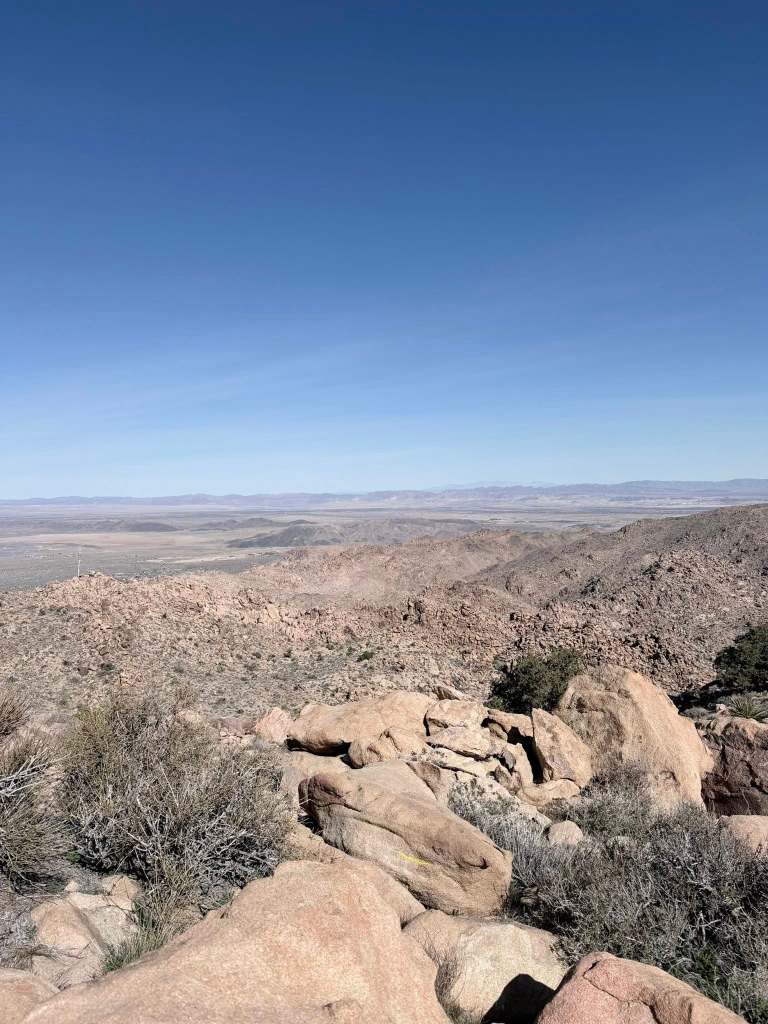
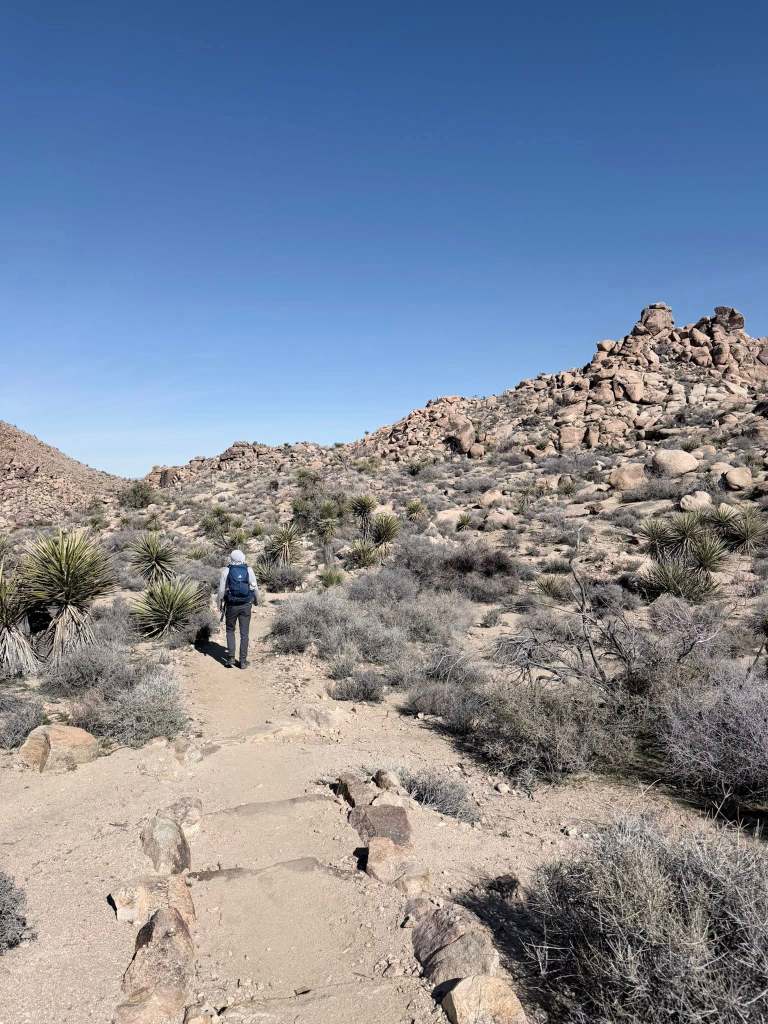
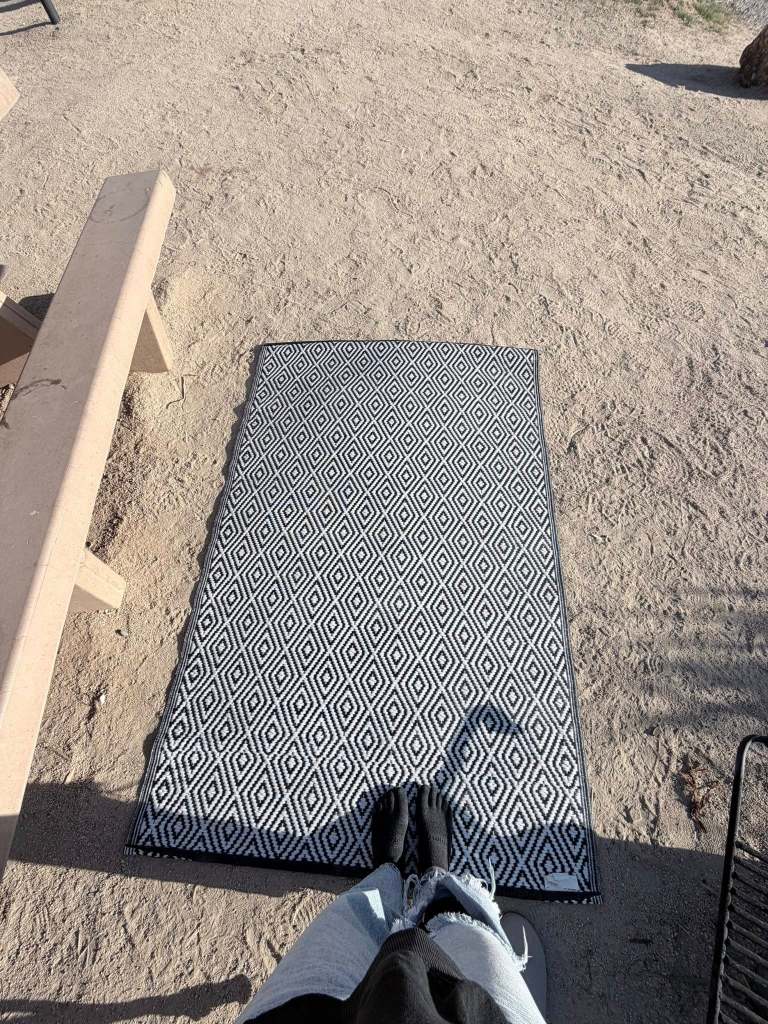
- To end day 2, instead of rushing to check out another trail, we made our way to the Indian Cove Campground ($35 a night). This was my personal favorite campground in Joshua Tree National Park; however, it wasn’t located right by any trails that we were planning to do. What I loved about the campground was that the sites were snug between two towering jumbo rock walls – perfect for winding down and practicing yoga; however, if you’re a creature of comfort, note that there are only pit toilets, no potable water available, and the cell service is unreliable.
Day 3: Long hike
- My favorite hike in Joshua Tree was the Warren Peak via Black Rock Trail and Panorama Loop (7.9 mile loop). We hiked the trail counterclockwise so that we could do the peak first and the canyon last. If you do it counterclockwise, the first few miles are easy with only a mild gain in elevation. Once you break off to do the peak portion, get ready – the elevation gain on this leg of the trail is intense but doable and well-worth it once at the peak. Once you descend, you’ll come through a beautiful canyon filled with yuccas, goldenbush, and desert shrubs.
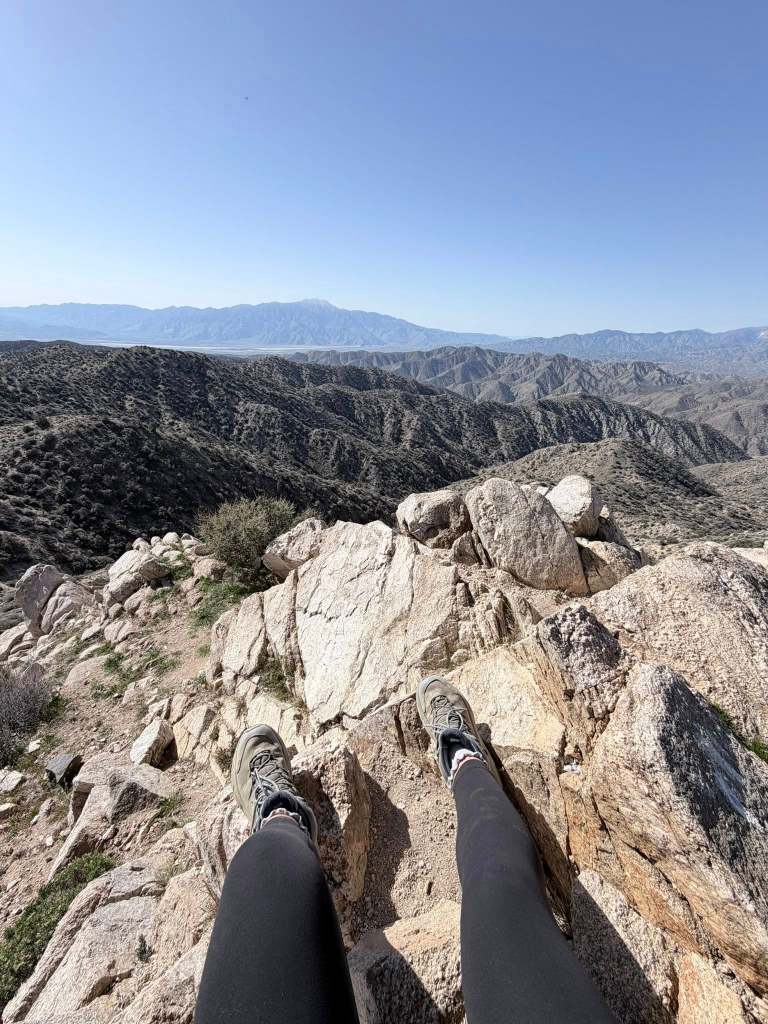
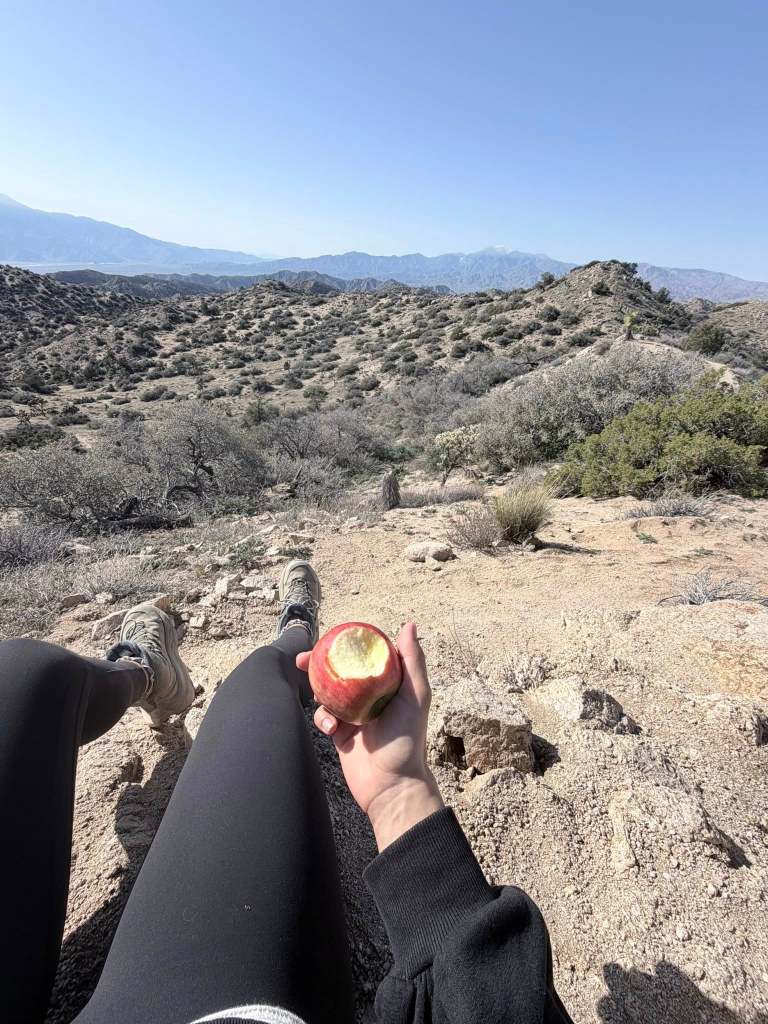
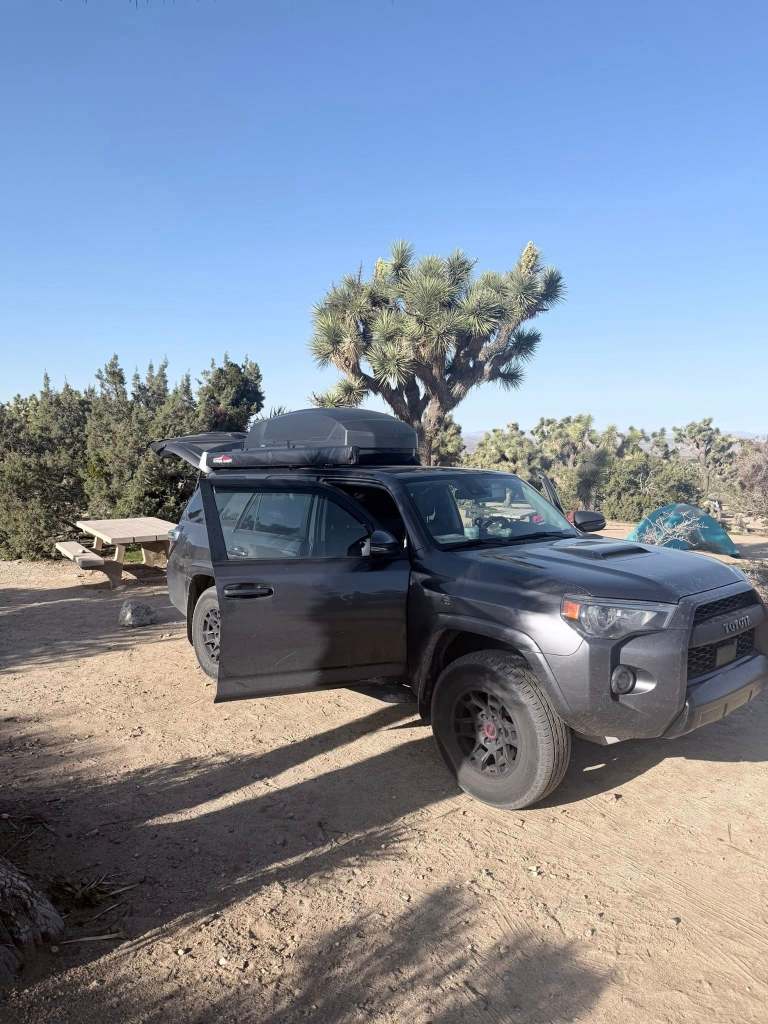
- After hiking the Warren Peak and Panorama Loop, we set up camp at the Black Rocks Campground ($35 a night) which was less than a minute from the trailhead – and so nice because we were so pooped after. We played a few rounds of cards at camp, made pancakes with our farmers market berries, and watched a few episodes of Snapped before settling down for the night. This campground had the most amenities of all the ones we stayed at: a few bars of spotty cell service, clean bathrooms with flushable toilets and sinks, trash receptacles, and water spouts with potable water.
Day 4: Sight-seeing
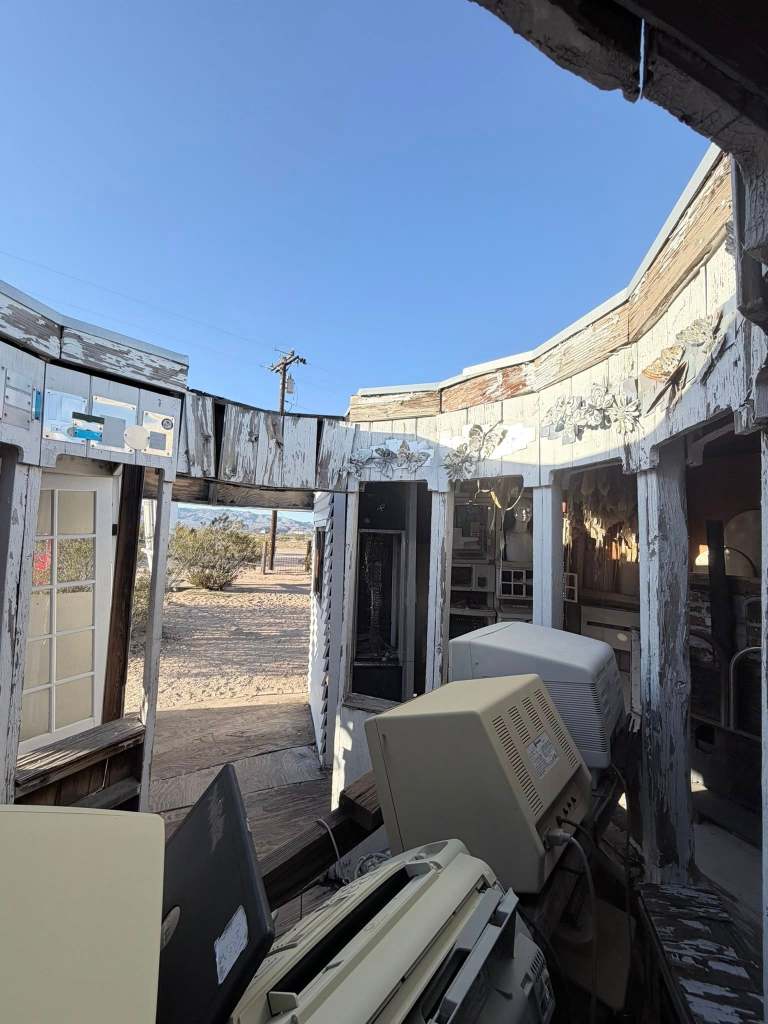
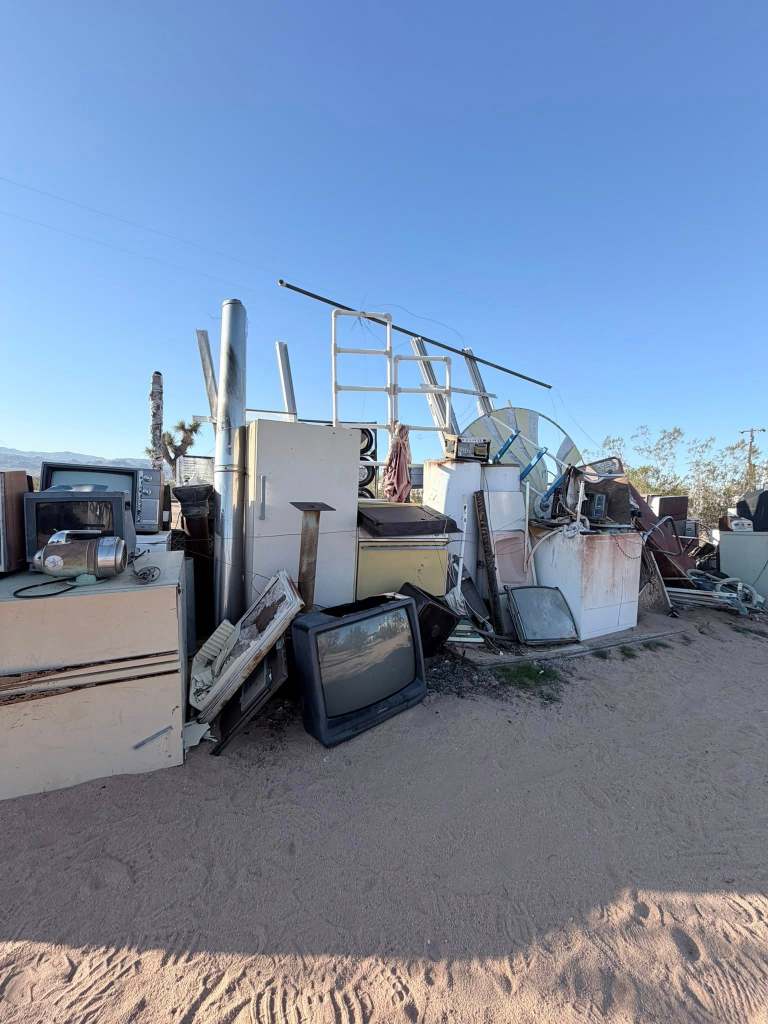
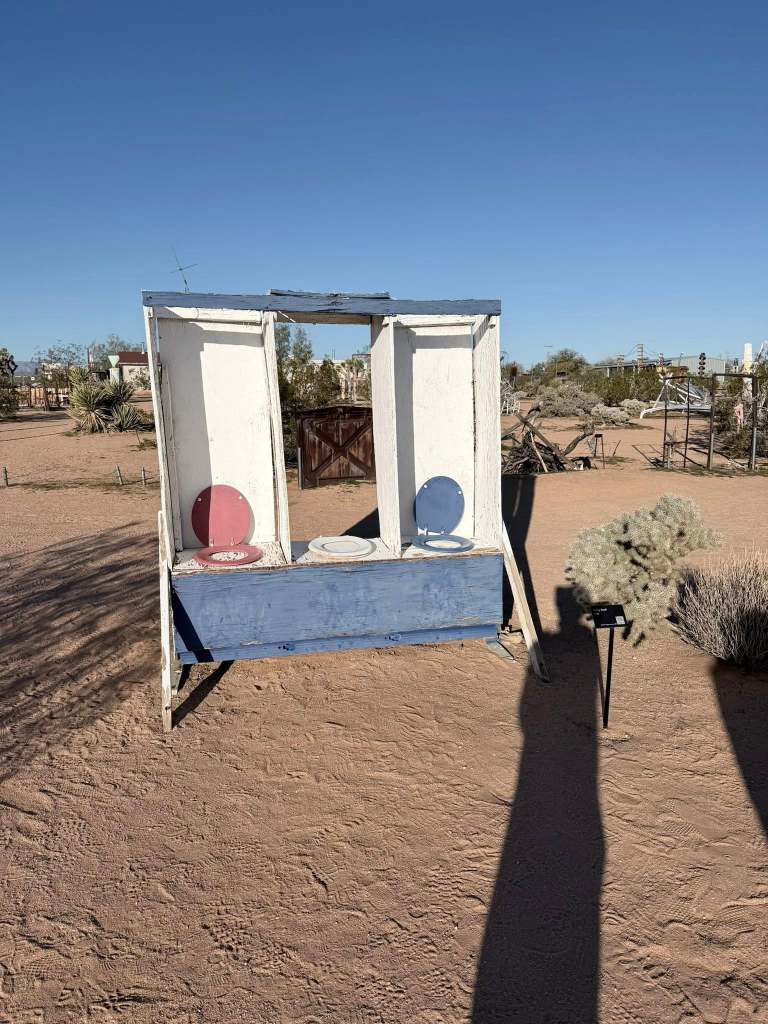
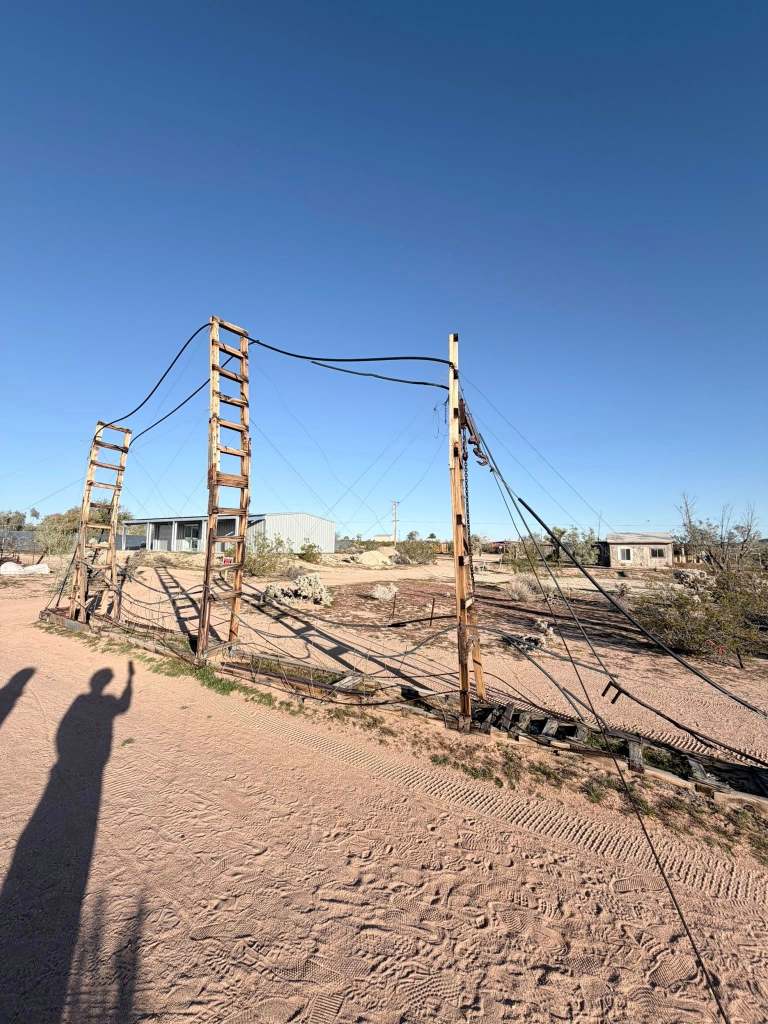
- Before leaving Joshua Tree, we drove 15 minutes north to the Noah Purifoy Desert Art Museum. This is a free, outdoor desert art museum filled with folk-art sculptures made of junked materials. The museum is open from sunup to sundown 365 days a year.
Happy trails to you reader – if you’re interested, I’ve hyperlinked my AllTrails account below (click on the picture to be redirected). And as always, I will link @AmoryWild’s vlog of our time in Joshua Tree once he uploads it. Xoxo, until we meet again. Take care, and take rest.
 Books, Bites, and Sights
Leave a comment